
Red gelcoat is one of the best looking finishes on the water, and one of the first to fade under Florida sun. This 30 ft Robalo restoration started with a hull that had turned chalky and pink from oxidation. Our team removed the oxidation, brought back the deep factory red, and then wrapped the restored surfaces in Yacht Armor marine protection film so the color stays rich for years instead of months.
Watch the 30FT Robalo Restoration Video
See the full transformation, from dull and oxidized to glossy red and film protected:
Why Red Gelcoat Oxidizes So Fast in South Florida
Gelcoat is the pigmented resin layer on the outside of a fiberglass hull. UV light slowly breaks that resin down, leaving a rough, chalky surface that scatters light. On white boats it shows up as a dull haze. On colored hulls like this Robalo, it is far more obvious: rich red fades to a washed out pink, and the color rubs off on your hand or a towel.
Salt spray, high heat, and year round boating in the Keys and South Florida speed the process up. Left alone, oxidation keeps eating into the gelcoat and makes each restoration harder. For a deeper look at the causes, read our guide to boat oxidation removal.
Step 1: Removing the Oxidation and Restoring the Red
Bringing back a faded red hull is about cutting away the dead, oxidized layer without removing more gelcoat than necessary. On this Robalo, the restoration followed our proven marine process:
- Deep wash and decontamination. The hull was washed and cleared of salt, grime, and stains so nothing would get ground into the gelcoat during correction. Stubborn marks like waterline stains are handled at this stage.
- Taping and masking. Graphics, hardware, rub rails, and trim were protected before any machine work.
- Compounding. A marine cutting compound and machine polisher removed the chalky oxidation and exposed the healthy red gelcoat underneath.
- Polishing. A finer polish refined the surface, removed compounding haze, and brought back the depth and gloss of the original color.
- Inspection and panel wipe. The hull was inspected under light and wiped clean of polishing oils so the film could bond properly.
The result is a true, saturated red again, not a temporary shine from a filler wax. But restored gelcoat starts oxidizing again the moment it goes back into the sun, which is why the next step mattered just as much.
Step 2: Wrapping the Robalo in Yacht Armor Marine Protection Film
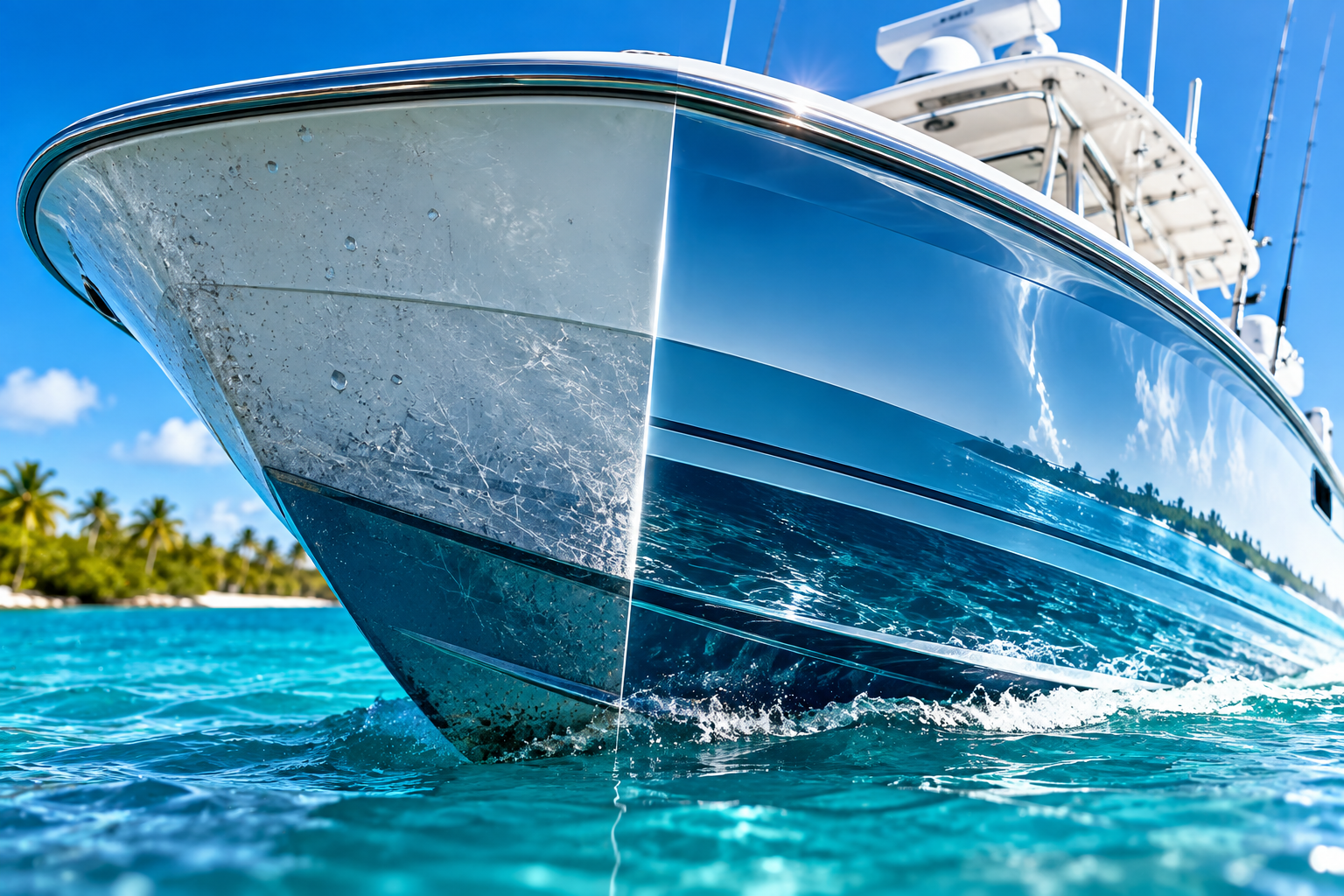
Once the red was restored, we protected it with Yacht Armor, an optically clear, self healing marine protection film (MPF) made specifically for boats. Instead of a coating that wears away, Yacht Armor is a physical layer of polyurethane film that sits on top of the gelcoat and takes the abuse so the color underneath does not.
Yacht Armor helps protect the restored finish from:
- UV fading and future oxidation
- Scuffs and scratches from docks, pilings, fenders, and lines
- Salt spray, bird droppings, fuel, and other staining contaminants
- Light swirl marks, which self heal with heat from the sun
Each panel is custom cut and installed by hand with careful edge work, so the film is nearly invisible and the red reads clean and glossy from the dock. BoatUS covered the product in its article on Yacht Armor as a gelcoat protection option, and you can learn more about how we install it on our marine protection film page.
Why Restore First, Then Film?
Marine protection film locks in whatever is underneath it. If the gelcoat is still oxidized, the film preserves a faded finish. That is why we always correct the gelcoat first and then apply the film. The order matters:
- Restoration brings back the color and gloss.
- Yacht Armor keeps that color and gloss from breaking down again.
Compared with wax or sealant alone, film gives a much longer window between corrections. If you are weighing your options, our breakdown of boat wax vs ceramic coating explains where each product fits, and our post on Yacht Armor in the Upper Keys covers how film compares to both.
Caring for a Yacht Armor Protected Boat
Film protected boats are easier to keep clean, but they still need regular care. Rinse with fresh water after every trip, wash with a pH neutral marine soap, and avoid harsh solvents or aggressive pads on the film. A routine plan like a boat detailing membership keeps the finish looking like it did the day this Robalo left our hands.
Restore and Protect Your Boat With Blue Diamond Detailing
Whether your hull is red, blue, black, or white, faded gelcoat can usually be brought back, and Yacht Armor can keep it that way. Blue Diamond Detailing is the exclusive Yacht Armor installer in the Upper Keys and works on site at your marina or slip. Explore our boat detailing services, see what drives pricing in our boat detailing cost guide, or find local service for Key Largo, Islamorada, and Marathon.
Ready to bring your boat back? Request a free quote or call 786-499-9941.
Frequently Asked Questions
Can faded red gelcoat really be restored?
In most cases, yes. As long as enough gelcoat remains, compounding and polishing remove the oxidized layer and bring back the original color. A professional inspection tells you how much correction your hull needs.
Can Yacht Armor go over oxidized gelcoat?
It can, but the film would lock in the faded look. For the best result, restore the gelcoat first, as we did on this Robalo, and then apply the film.
Will Yacht Armor change the color of my hull?
No. Yacht Armor is optically clear, so the restored color shows through with full gloss.
Do I have to haul my boat out for this service?
Usually not. Our team can restore and film many boats on site at your marina or slip. We will confirm the best setup when we quote your boat.


