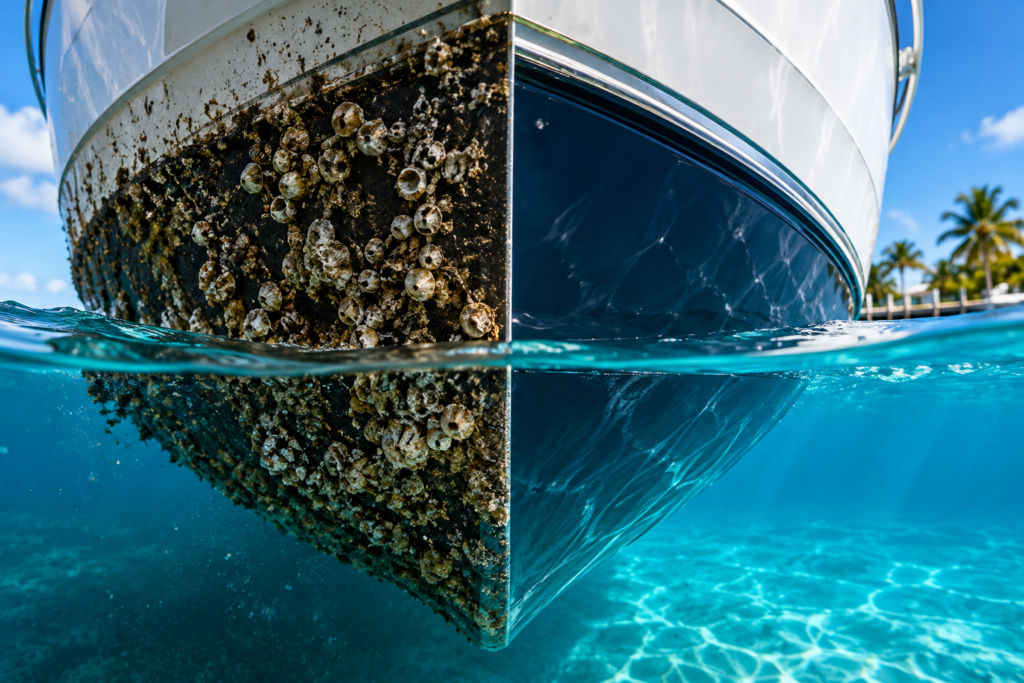
Post-storm boat detailing starts with a full fresh-water rinse to clear storm surge and salt residue, a hull-to-bilge inspection for hidden damage, and thoroughly drying below-deck compartments before mold and mildew take hold — all done as soon as it’s safe to reach your marina after a hurricane or tropical storm. Boats left sitting in storm debris and saltwater residue for more than a few days in South Florida’s heat are far more likely to end up with permanent staining, corrosion, and cabin odors that are expensive to reverse.
Why Storm Season Is Hard on Boats in South Florida
From late August through October, South Florida sits in the heart of Atlantic hurricane season, and even a storm that never makes landfall nearby can push storm surge, wind-driven rain, and debris into marinas up and down the coast and through the Keys. Boats that ride out a storm on a lift or a mooring are hit with saltwater intrusion into hatches and vents, sargassum and debris packed into scuppers and thru-hulls, and stray electrical current from damaged shore power pedestals that accelerates corrosion. The combination of standing saltwater, heat, and humidity means damage that would take weeks to develop in a dry climate can set in within days here.
The First 48 Hours After the Storm
- Check it’s safe first. Confirm downed power lines, damaged docks, and unstable pilings are clear before boarding, and never touch water near a marina with visible storm damage to shore power.
- Inspect lines, fenders, and the hull for chafe, cracks, or impact damage before you start cleaning anything.
- Rinse everything with fresh water — deck, hull, canvas, and hardware — to stop salt crystallization before it sets in.
- Open and air out below-deck spaces as soon as it’s dry enough, running bilge pumps and dehumidifiers to get ahead of mildew.
- Photograph anything unusual for your insurer before you clean it, in case a claim is needed.
Common Storm Damage We See
- Saltwater staining on gelcoat and upholstery from storm surge or driving rain that got past canvas and hatch seals.
- Debris scratches and impact marks from loose gear, docks, or other vessels during high wind and surge.
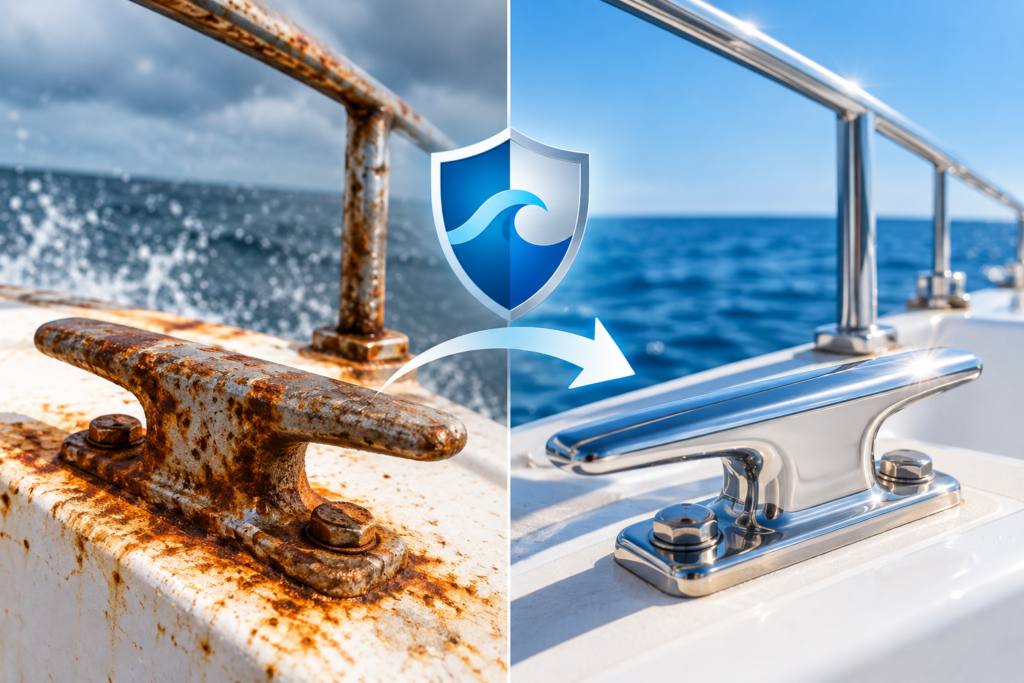
- Accelerated metal corrosion on rails, cleats, and hardware from extended saltwater exposure — see our guide on stopping saltwater corrosion for prevention between details.
- Musty, mildew odor in the cabin from trapped moisture in carpet, cushions, and headliner — our ozone odor removal treatment is the fastest way to clear it permanently.
Storm-Prep Habits That Reduce Damage Next Time
The boats that come through hurricane season the cleanest are the ones with a protective barrier already in place before the storm hits. A current boat detailing and metal polishing service keeps gelcoat sealed and hardware coated so storm-driven salt and debris have less to grip onto, and marine ceramic coating adds another layer of protection against staining. Before the next storm, check the National Hurricane Center for your storm-prep timeline, double-check dock lines and chafe guards, and keep a corrosion inhibitor like Boeshield T-9 on hand for electrical connections and hardware. Stocking up on fresh-water rinse supplies and covers from a marine retailer such as West Marine before storm season starts also saves scrambling afterward.
Frequently Asked Questions
How soon should I detail my boat after a hurricane?
As soon as it’s safe to reach your boat — ideally within 24 to 48 hours. A fresh-water rinse to clear salt and debris is the priority; a full detail and inspection can follow once conditions are stable.
Can saltwater flooding ruin my boat’s interior?
It can if it sits too long. Carpet, cushions, and upholstery that stay wet in Florida heat develop mold and permanent odor within days, so getting airflow and dehumidification going quickly is critical.
Does insurance cover storm-related detailing?
Many marine policies cover cleanup and mitigation after a named storm, but coverage varies by carrier and policy. Photograph damage before cleaning and check with your insurer or agent before assuming coverage either way.
How do I prevent mildew smell after a storm?
Get moisture moving out fast — open hatches, run fans or a dehumidifier, and extract any standing water from bilges and lockers within the first day. If odor has already set in, an ozone or UV-C treatment removes it at the source rather than masking it.
Get Your Boat Storm-Ready — Or Storm-Recovered
Blue Diamond Detailing has served South Florida to the Keys since 2000, and storm recovery details are one of the most urgent calls we get every hurricane season. Whether you need an emergency post-storm rinse-down or want a protective detail in place before the next system develops, see our detailing packages or contact us to get on the schedule.