Quick answer: Steam detailing uses pressurized, low-moisture vapor—typically 290–320°F in the boiler and 55–75 PSI at the nozzle—to break down grime, lift stains, and kill odor-causing bacteria on car interiors without harsh chemicals. It’s one of the fastest-growing trends in professional detailing heading into 2026, and it works on fabric, leather, vents, dashboards, and even engine bays.
Quick Facts: Steam Detailing
- Temperature: Professional units run a 290–320°F boiler with a 240–280°F nozzle tip—the number that actually matters for sanitizing.
- Pressure: Typically 55–75 PSI, enough to dislodge embedded dirt without soaking upholstery.
- Dry time: Because it’s low-moisture vapor rather than a soaking spray, interiors are usually dry in 15–30 minutes.
- Versatility: Fabric seats, leather, dashboards, vents, door panels, and engine bays can all be steam-cleaned with the right attachment.
How Steam Detailing Works
A professional steam cleaner heats water in a pressurized boiler until it becomes a dry, low-moisture vapor. That vapor does three things at once: heat breaks down grime and oils, pressure dislodges debris from fabric pores and stitching, and the sustained high temperature kills bacteria on contact. Because so little moisture actually reaches the surface, seats and carpets are only lightly damp afterward instead of soaked, which is why steam-cleaned interiors dry so much faster than interiors cleaned with wet extraction alone.
Why It’s One of 2026’s Biggest Detailing Trends
Industry trend reports for 2026 point to interior sanitation as one of the fastest-moving parts of the business, with three shifts happening at once: chemistry built to safely handle modern interior surfaces, odor management through ozone and enzymatic treatments, and steam machines becoming a standard bay tool rather than a specialty add-on (carwash.com, 7 Professional Detailing Trends for 2026). Customers increasingly want an interior that’s not just wiped down, but genuinely sanitized—a shift we’ve also covered on the odor side in our guide to ozone odor removal.
In South Florida, that demand is amplified by the climate. Humidity, sudden downpours, and wet gear tossed in the back seat after a day on the water all push moisture into carpet and seams, where it becomes the mildew and odor problems steam is especially good at reaching.
The Benefits of Steam Over Traditional Chemical Cleaning
Chemical-free sanitizing: Heat alone is usually enough to sanitize most interior surfaces, cutting down on the harsh solvents and fragranced chemicals used in older cleaning methods—a real advantage for customers with kids, pets, or sensitivities.
Stain and odor removal: The combination of heat and pressure lifts embedded dirt and spills out of upholstery and carpet fibers while addressing the bacteria that cause lingering odors, rather than just masking them.
Fast turnaround: Low-moisture vapor means interiors dry in a fraction of the time a full wet-extraction clean would take, which matters for anyone who needs their vehicle back the same day.
One tool, many surfaces: The same steamer that deep-cleans a fabric seat can also degrease an engine bay or sanitize air vents and touchscreens, making it one of the more versatile pieces of equipment in a detailer’s bay.
Where Steam Fits Into a Full Detail
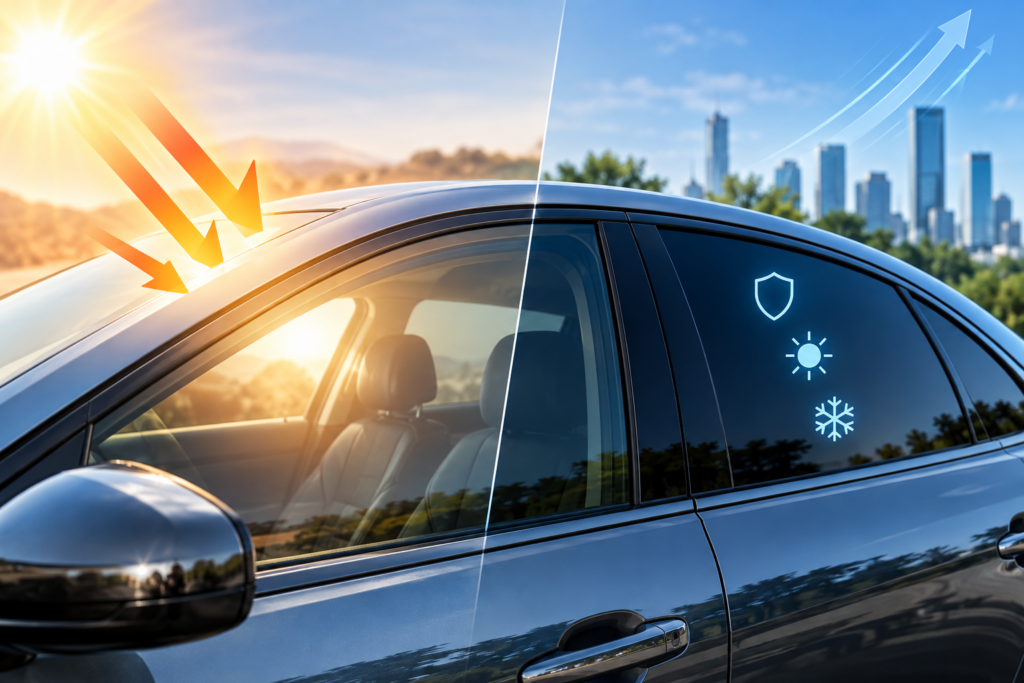
Steam detailing works best as part of a complete interior auto detailing service rather than a standalone step—vacuuming and pre-treatment first, steam for the deep clean, then a final protectant pass on leather and vinyl surfaces. Many Blue Diamond customers pair an interior steam detail with exterior protection like ceramic window tint to cut interior heat buildup between details, since a cooler cabin also means slower odor and mildew growth in South Florida’s climate.
Frequently Asked Questions
Is steam cleaning safe for leather seats?
Yes, when done by a trained detailer using the correct nozzle, distance, and dwell time. Leather requires a gentler pass than fabric or vinyl to avoid over-drying the material, followed by a conditioner to replace the moisture the leather naturally holds.
Does steam detailing kill odors, or just mask them?
Steam addresses odors at the source by killing the bacteria and breaking down the residue that causes them, rather than covering the smell with fragrance. For deeply set-in odors like smoke or mildew, it’s often paired with an ozone treatment for full coverage.
How long does a steam interior detail take?
Most passenger vehicles take longer for a full steam detail than a standard interior clean, since every surface is treated individually, but the low-moisture process still dries in about 15 to 30 minutes once the steaming is finished.
Can steam cleaning damage my car’s electronics or touchscreen?
A trained detailer uses lower pressure and a wider nozzle pattern around electronics, touchscreens, and switches, and avoids direct high-pressure contact with any exposed connector or seam.
Ready for an interior that’s actually sanitized, not just wiped down? Book an interior detailing appointment or see our full detailing packages.
Sources: carwash.com – 7 Professional Detailing Trends for 2026, AquaPro Vac Steam Cleaner Guide.