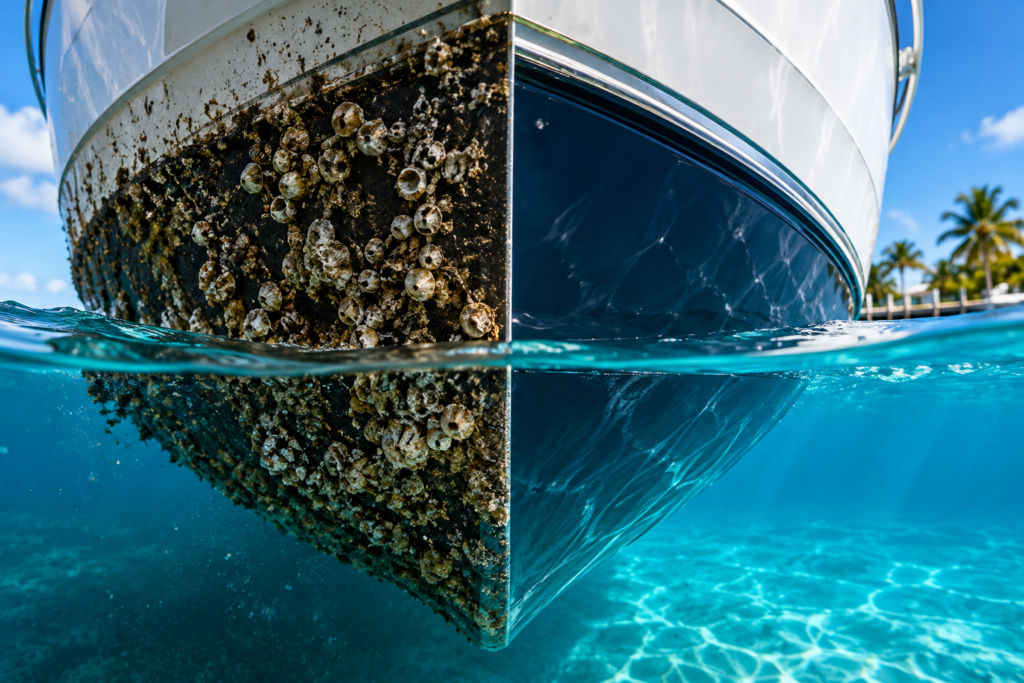
South Florida’s warm, nutrient-rich water is a paradise for boaters—and for barnacles, algae, and slime that latch onto a hull within days of splashdown. The single biggest defense against that growth is the right antifouling bottom paint, applied correctly and reapplied on schedule. Here’s how to choose it.
Quick Facts: Bottom Paint in Florida
- Reapplication: Most bottom paints need a fresh coat every 12 months in Florida’s warm water; some multi-season formulas stretch to 2–3 years.
- Main types: Ablative, self-polishing copolymer, and hard/modified epoxy.
- Copper matters: Higher copper content fights shell fouling (barnacles, zebra mussels) better, but aluminum hulls and outdrives need copper-free, ablative-safe formulas to avoid galvanic corrosion.
- Docked vs. underway: Boats that sit at a dock or mooring do best with self-polishing copolymer paint; boats used often can run ablative paint since motion helps it wear evenly.
What Is Antifouling Bottom Paint?
Antifouling bottom paint is a specialized marine coating applied below the waterline to slow the growth of barnacles, algae, and other marine organisms. Left untreated, a fouled hull creates drag that can cut cruising speed and fuel efficiency by double digits, and heavy growth left in place can eventually damage gelcoat or metal fittings. A properly maintained bottom coat keeps a hull moving efficiently and protects the investment underneath it.
Types of Bottom Paint
Ablative paints wear away gradually as the boat moves through the water, constantly exposing a fresh biocide layer. They work best on boats that get regular use, since motion is what wears the coating evenly. Ablatives come in copper-based and copper-free versions and in single- or multi-season formulas.
Self-polishing copolymer paints are a refined ablative that releases biocide in a controlled, predictable way whether the boat is moving or sitting still at the dock. Many last multiple seasons and only need light prep before relaunch—a strong fit for boats that spend more time moored than underway.
Hard (modified epoxy) paints don’t wear away the way ablatives do. Instead, biocide leaches out of a durable film that stays intact and builds up in layers over multiple applications, requiring sanding between coats. These hold up well for boats that are hauled, trailered, or scrubbed frequently, since the hard finish tolerates cleaning better than a soft ablative.
Copper-based vs. copper-free: Higher copper concentrations generally provide stronger protection against shell fouling like barnacles and zebra mussels—a real concern along the Florida coast and Keys. Copper-free formulas using biocides like Econea are a solid alternative and are required on aluminum hulls, sterndrives, and outboards to prevent galvanic corrosion.
How Often to Reapply in Florida Waters
As a baseline, most boats in Florida’s warm saltwater need a fresh coat of bottom paint every year to stay ahead of aggressive fouling season. Multi-season self-polishing copolymer paints can stretch that to two or three years depending on usage and water conditions. Because fouling pressure is highly location-specific—a boat in a Biscayne Bay marina fouls differently than one on a mooring ball in the Keys—the right interval is best confirmed with a detailer who knows the local water.
Choosing the Right Paint for Your Boat
Start with how the boat is used. Frequently underway: lean toward an ablative. Mostly docked or moored: a self-polishing copolymer paint holds up better between outings. Aluminum hull, sterndrive, or outboard: copper-free is non-negotiable to avoid corrosion. Heavy fouling area or long lay-up periods: a higher copper concentration or a hard epoxy paint will offer more staying power.
Professional Application vs. DIY
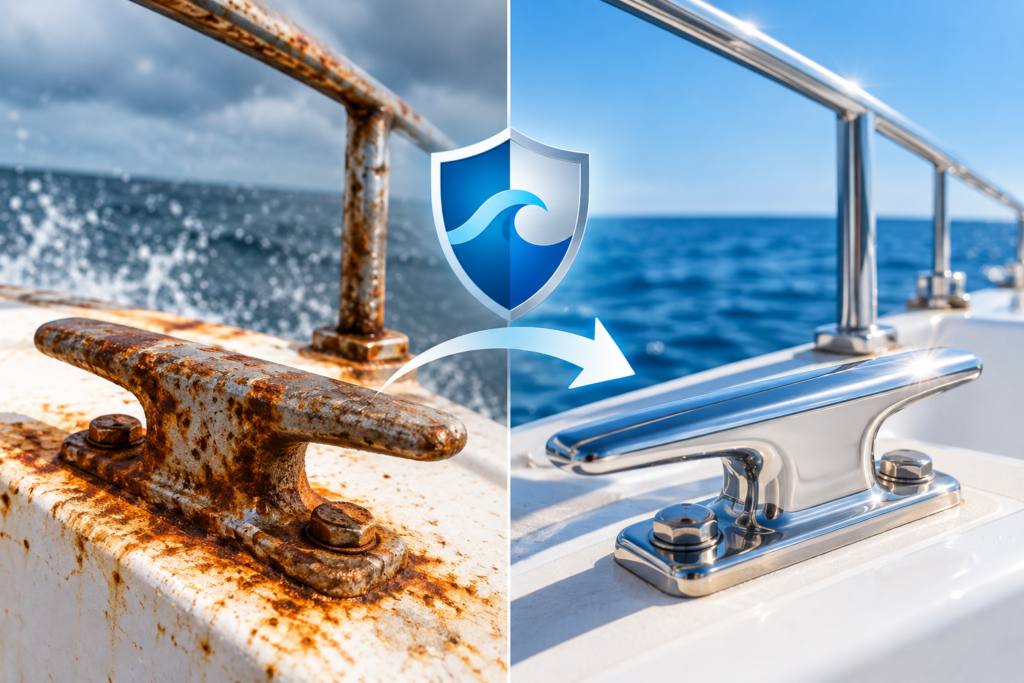
Bottom paint looks simple—roll it on, let it dry—but the prep work is where most DIY jobs go wrong. Old paint needs to be properly sanded or blasted (with the right respiratory and containment precautions, since old antifouling coatings can contain heavy metals), the hull needs to be fully dry and clean, and the paint chemistry needs to match what’s already on the hull to avoid a reaction between old and new coats. A professional boat detailing team also spots early hull, prop, and through-hull issues during the process that an untrained eye can miss. Pairing a fresh bottom coat with routine saltwater corrosion protection for metal fittings and proactive barnacle prevention between haul-outs keeps a hull performing at its best year-round.
Frequently Asked Questions
How long does bottom paint last in Florida?
Most single-season bottom paints last about a year in Florida’s warm water before fouling resistance drops off. Multi-season self-polishing copolymer paints can last two to three years depending on how much the boat is used and where it’s kept.
Is copper-based or copper-free bottom paint better?
Copper-based paint generally provides stronger protection against shell fouling like barnacles, making it a popular choice in Florida. Copper-free paint is required for aluminum hulls, sterndrives, and outboards to prevent galvanic corrosion, and modern copper-free biocides like Econea perform well against most fouling.
Can I apply bottom paint myself?
You can, but surface prep is the part that determines how well it holds up, and sanding old antifouling coatings requires proper safety precautions. Many boat owners in South Florida and the Keys have a professional detailer handle the prep and application to get full life out of the coating.
Ready for a hull that stays clean and fast all season? See Blue Diamond Detailing’s boat care packages or check out our Key Largo, Islamorada, and Marathon service areas in the Florida Keys.
Sources: TotalBoat Bottom Paint Guide, Pettit Marine Paint.