
Graphene coatings generally handle Florida’s brutal heat and UV exposure better than traditional ceramic coatings — they resist water spotting and heat-related streaking more effectively — but a properly applied ceramic coating still delivers excellent, long-lasting protection at a lower price point. Here’s exactly how the two compare for South Florida vehicles, and which one is worth the investment for your car, truck, or exotic.
What Is Ceramic Coating?
Ceramic coating is a liquid polymer, usually silica dioxide (SiO2) based, that chemically bonds to your vehicle’s clear coat. Once cured, it forms a semi-permanent, glass-like layer that resists UV fading, oxidation, and light chemical staining from bird droppings, tree sap, and road grime. A single professional application typically lasts two to five years, depending on the product tier and how well the vehicle is maintained afterward.
Brands like Ceramic Pro and Gtechniq built their reputations on multi-layer ceramic systems, and we’ve applied both on everything from daily drivers to Miami’s exotic car collections.
What Is Graphene Coating?
Graphene coating is the newer generation of paint protection. It uses graphene oxide, a single layer of carbon atoms, blended into the coating formula. Graphene molecules are smaller and pack more densely than the silica molecules in standard ceramic, which is why graphene coatings tend to resist heat buildup, water spotting, and static-attracted dust better in direct, sustained sunlight — exactly the conditions a car parked in a South Florida driveway deals with every single day.
Graphene vs Ceramic Coating: Head-to-Head Comparison
| Feature | Ceramic Coating | Graphene Coating |
|---|---|---|
| Heat resistance | Very good | Excellent |
| Hydrophobic (water beading) | Excellent early, fades over time | Excellent, holds up longer |
| UV & oxidation resistance | Excellent | Excellent |
| Water spotting resistance | Good | Superior |
| Typical lifespan | 2–5 years | 2–5 years, often self-cleaning longer |
| Cost | $ | $$ |
Why Florida Heat and UV Change the Calculus
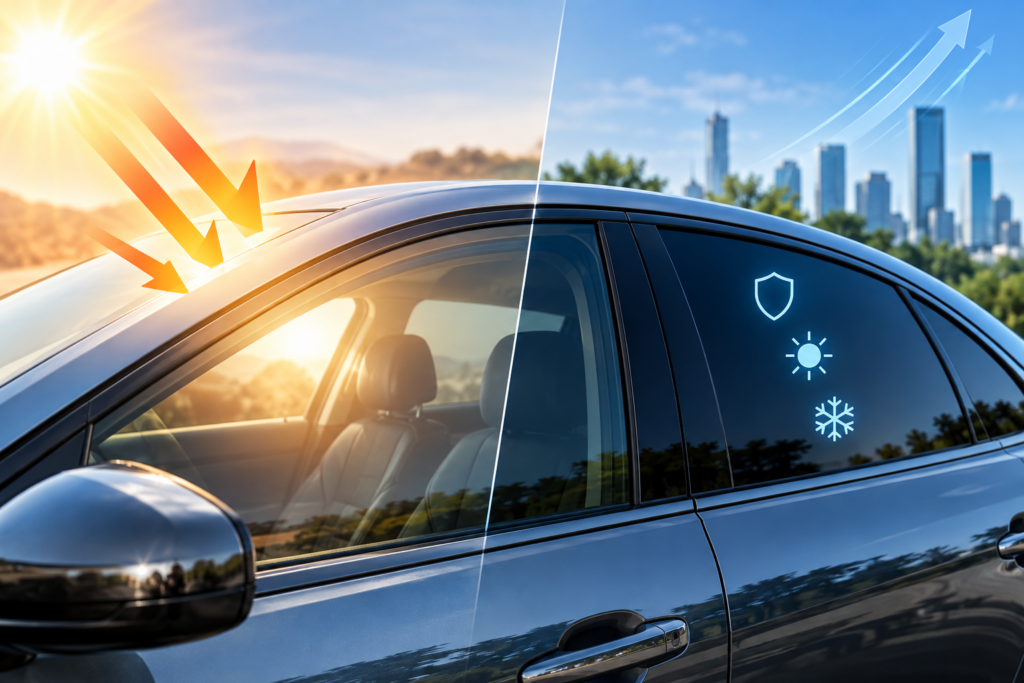
South Florida asks more of a coating than almost anywhere else in the country. Between triple-digit hood temperatures in a parking lot, near-constant UV index, salt air along the coast, and sudden afternoon downpours, a paint protection product gets tested daily. Graphene’s denser molecular structure sheds heat faster, which matters when a black or dark-colored vehicle can hit surface temperatures well above the surrounding air. That same heat resistance is also why graphene-coated panels tend to dry with fewer water spots after a Florida rainstorm — the water simply doesn’t have time to bake onto the surface.
If your vehicle also gets exposed to salt spray from boating or coastal driving, pairing a coating with our ceramic window tinting adds another layer of UV and heat protection for the interior.
Which Coating Should You Choose?
For most daily drivers in Miami-Dade, Broward, or Palm Beach counties, a professional ceramic coating still delivers outstanding protection and value. If you park outdoors year-round, own a dark or exotic-colored vehicle, or simply want the longest possible interval between details, graphene coating is worth the upgrade. Either way, the coating is only as good as the prep work underneath it — paint correction before application makes the biggest visible difference.
We also install XPEL paint protection film for high-impact areas like the front bumper and hood, which pairs well with either coating for maximum rock-chip and road-debris protection. See our full auto detailing services for package details.
Professional Application Matters More Than the Product
Both ceramic and graphene coatings require a fully decontaminated, defect-free paint surface to bond correctly. Applying either product over swirl marks, water spots, or contamination locks those flaws in permanently. That’s why every coating job at Blue Diamond Detailing starts with a full paint correction, not just a quick wipe-down.
Frequently Asked Questions
Is graphene coating better than ceramic coating?
Graphene coating generally outperforms ceramic coating in heat resistance and water-spot resistance, which makes it a strong choice for Florida’s climate. Standard ceramic coating remains an excellent, more budget-friendly option with similar UV and chemical protection.
How long does ceramic or graphene coating last in Florida?
Most professional-grade coatings last two to five years in South Florida conditions with proper maintenance, including regular pH-neutral washes and avoiding automated brush car washes.
Do I still need to wash my car after a coating is applied?
Yes. Coatings reduce how much dirt and contaminants stick to your paint and make washing easier, but they don’t eliminate the need for regular maintenance washes, especially with Florida pollen, salt air, and rain.
Ready to protect your vehicle before the next heat wave? View our detailing packages or contact Blue Diamond Detailing to schedule a consultation and get a recommendation tailored to your vehicle and how you drive it.


One Response