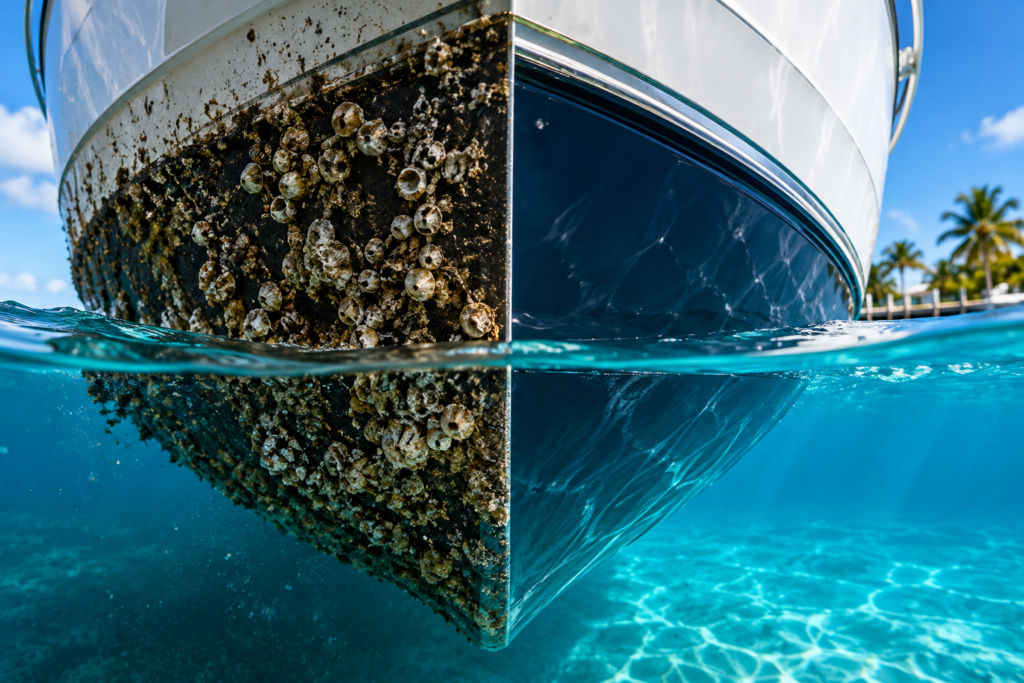
Barnacle prevention comes down to keeping a fast-acting antifouling or foul-release coating on the hull, staying on a diver cleaning schedule matched to how much the boat is used, and catching the first rough patches before larvae get a permanent grip. South Florida’s warm, nutrient-rich water keeps barnacle larvae active nearly year-round, which is why hulls here foul faster than almost anywhere else in the country.
Why South Florida Waters Are a Barnacle Magnet
Barnacle larvae need warm water, sunlight, and a food supply to settle and grow, and South Florida’s coastal and Keys waters check every box for most of the year. A hull that might stay relatively clean for months in a cooler climate can pick up a visible barnacle crop in just a few weeks here, especially on boats that sit at a dock more than they run. Once larvae cement themselves to a hull, they’re effectively permanent until they’re mechanically removed — there’s no chemical that dissolves an established barnacle.
Bottom Paint vs. Foul-Release Coatings
Traditional antifouling bottom paint works by slowly releasing biocides (usually copper-based) that poison larvae before they can settle, and it comes in ablative formulas that wear away with use or hard formulas that hold their surface and can be scrubbed clean. Newer foul-release coatings take a different approach entirely: an ultra-smooth silicone or fluoropolymer surface gives barnacles nothing to grip onto, so most organisms slide off once the boat is moving at speed, with little to no biocide involved. Foul-release coatings tend to cost more upfront and work best on boats that run regularly, while ablative bottom paint remains the more reliable choice for boats that sit at the dock for long stretches.
Signs Your Hull Needs Attention
- Rough or sandpaper-like texture: often the first sign of slime and algae building a base layer for barnacles to attach to.
- Visible white or gray specks below the waterline: early-stage barnacles, easiest and cheapest to remove before they mature.
- Noticeably slower speed or higher fuel use: hull drag from fouling can measurably hurt performance well before fouling is visible from the dock.
- Bottom paint looking thin, chalky, or patchy: a sign the antifouling has used up its active biocide and needs to be reapplied.
A Cleaning Schedule Based on How You Use the Boat
- Boats run weekly or more: diver hull cleaning every 4-6 weeks to catch light growth before it hardens.
- Boats run occasionally: every 3-4 weeks, since less prop wash and movement lets fouling take hold faster.
- Boats sitting at the dock most of the time: every 2-3 weeks, with extra attention to waterline, running gear, and thru-hulls.
- Full bottom paint reapplication: typically every 1-2 years depending on the paint type and how it’s holding up.
Foul-Release Technology Gaining Ground in 2026
More South Florida boat owners are moving toward silicone-based foul-release systems and low-copper or copper-free antifouling paints, driven partly by tightening restrictions on copper bottom paint in some coastal areas and partly by better long-term performance on boats that stay active. Brands like Pettit Marine Paint and Sea Hawk Paints now offer multi-season and eco-conscious formulas built specifically for warm, high-fouling waters like ours, which is worth discussing at your next haul-out.
Frequently Asked Questions
How often should a boat hull be cleaned in South Florida?
Most boats need a diver hull cleaning every 2-6 weeks depending on how often they run, with boats that sit at the dock most of the time needing the most frequent attention.
Can barnacles damage a boat’s hull?
Yes. Beyond the drag and fuel penalty, barnacles can damage gelcoat and bottom paint when they’re scraped off, and heavy fouling on running gear can strain seals, bearings, and the drivetrain.
Is foul-release coating better than traditional bottom paint?
It depends on how the boat is used. Foul-release coatings perform best on boats that run often enough to shed organisms at speed, while ablative or hard antifouling paint is generally more reliable for boats that spend most of their time sitting at the dock.
Can I remove barnacles myself?
Light growth can sometimes be scraped off, but improper scraping easily gouges gelcoat or damages bottom paint. Professional diver cleaning uses tools matched to your hull’s coating to remove fouling safely.
Keep Your Hull Fouling-Free
Blue Diamond Detailing has served South Florida to the Keys since 2000, and hull and bottom care is one of the most requested add-ons to our boat detailing service. If barnacles and salt have reached your hardware too, ask about our metal polishing service, and see related reading on protecting your boat’s metal from saltwater corrosion and fixing oxidized gelcoat. Ready to book? Check our detailing packages or contact us to schedule.