
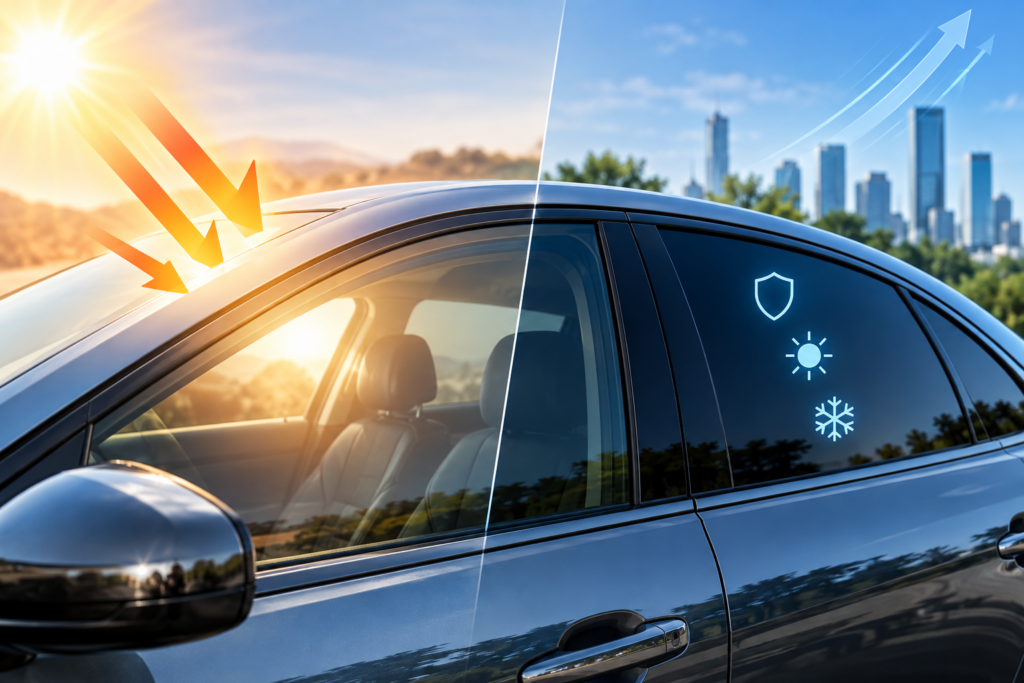
Ceramic window tint uses nano-ceramic particles instead of dye or metal to block up to 99% of UV rays and a majority of solar infrared heat, without interfering with GPS, phone, or radio signals the way older metallic films can. That combination of heat rejection, UV protection, and signal clarity is why it’s become South Florida drivers’ top film upgrade heading into 2026, especially for anyone who parks outside in the state’s year-round sun.
Why Ceramic Beats Dyed or Metallic Tint
Dyed tint is the budget option: it darkens glass but does little for heat rejection, and it’s prone to fading into a purple-brown haze within a few Florida summers. Metallic tint rejects heat better by embedding tiny metal particles in the film, but that same metal content can interfere with GPS, cell signal, and toll transponders, and it can look overly reflective. Ceramic film uses non-conductive ceramic nanoparticles instead, so it delivers strong heat and UV rejection with a clean, non-metallic look and zero signal interference — and unlike dye, it doesn’t fade or discolor over time.
How Much Heat and UV It Actually Blocks
Quality ceramic films typically block up to 99% of UV-A and UV-B rays, which is the single biggest factor in dashboard cracking, upholstery fading, and interior sun damage. On the infrared side, ceramic film commonly rejects the majority of solar infrared heat that would otherwise pass through untinted glass, which is what actually makes a parked car noticeably cooler to get back into — more than tint darkness alone ever will.
What’s Legal in Florida
Florida’s tint law (F.S. 316.2953) sets minimum light transmission, not maximum darkness: front side windows must allow more than 28% of light in, while back side windows and the rear window must allow more than 15%. These limits apply regardless of film type, so going ceramic doesn’t change what’s legal — it just gets you better heat and UV performance at whatever legal darkness you choose. Rules can be updated, so it’s worth confirming current limits before your install if you’re unsure.
Ceramic Tint vs. Ceramic Coating — They’re Not the Same Thing
These two get mixed up constantly. Ceramic window tint is a film applied to glass that manages heat, UV, and glare. Ceramic window tinting is what we’re covering here. A ceramic coating, on the other hand, is a liquid polymer applied to your paint that protects and adds gloss — read our comparison of graphene vs. ceramic coating for how that decision plays out in Florida heat. Many of our customers pair both: ceramic tint on the glass and a ceramic or self-healing PPF on the paint, for full-vehicle protection front to back.
What to Expect From a Professional Install
A proper ceramic tint job starts with a full glass cleaning to remove any residue or old adhesive, precise computer- or hand-cut film patterns for each window, and a careful edge-to-edge application that avoids bubbling or lifting. Expect a short curing period afterward before rolling windows down, and ask about a manufacturer warranty — reputable ceramic films from brands like LLumar and 3M typically carry lifetime, no-fade warranties when professionally installed.
Frequently Asked Questions
Does ceramic tint interfere with GPS or cell signal?
No. Ceramic film is non-metallic and non-conductive, so it doesn’t block or degrade GPS, cellular, radio, or toll transponder signals the way older metallic tints could.
How long does ceramic window tint last?
A professionally installed ceramic film typically lasts the life of the vehicle without fading, bubbling, or turning purple, which is why most reputable brands back it with a lifetime warranty.
Is ceramic tint legal in Florida?
Yes, ceramic tint is legal as long as it meets Florida’s minimum light transmission requirements — front side windows above 28% and rear windows above 15% under current state law.
What’s the difference between ceramic tint and ceramic coating?
Ceramic tint is a film for glass that manages heat, UV, and glare. Ceramic coating is a liquid polymer applied to paint for gloss and protection. They solve different problems and are often installed together.
Ready to Upgrade Your Glass?
Blue Diamond Detailing has served South Florida to the Keys since 2000, and ceramic window tint is one of our most requested upgrades heading into 2026. Pair it with our auto detailing service or a fresh vehicle wrap for a complete refresh, and see our detailing packages or contact us to schedule your install.

One Response